Introduction
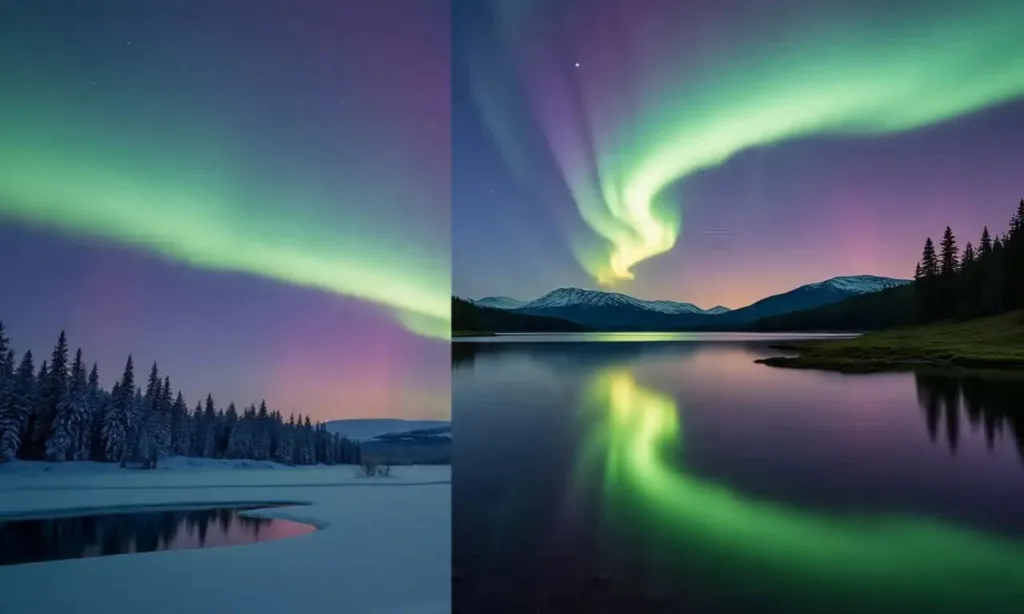
The Northern Lights, also known as the Aurora Borealis, are one of nature’s most breathtaking displays. Tonight, skywatchers across certain regions of the Northern Hemisphere may be treated to this dazzling show of shimmering greens, purples, and pinks dancing across the night sky. For centuries, the Northern Lights have captivated travelers, inspired myths, and served as a reminder of the power of our universe.
In this detailed guide, we will explore why the Northern Lights are visible tonight, the science behind them, the best places and times to watch, tips for capturing them on camera, and what experts are predicting for the coming days. If you are wondering how, when, and where you can see the Aurora Borealis tonight, this article has everything you need.
What Causes the Northern Lights?
The Northern Lights occur when charged particles from the Sun, carried by solar winds, collide with gases in Earth’s atmosphere. This interaction releases energy in the form of light, creating the glowing curtains and waves that appear in the night sky.
- Green Lights: Produced when solar particles collide with oxygen.
- Purple and Pink Lights: Created when nitrogen is involved.
- Red Glows: Rare, formed at high altitudes with oxygen reactions.
Tonight’s aurora activity is expected to be particularly strong due to a recent burst of solar activity, including coronal mass ejections (CMEs) that have sent streams of charged particles toward Earth.
Where Can You See the Northern Lights Tonight?
The visibility of the Northern Lights depends on your location, the strength of the solar storm, and local weather conditions.
Best regions for tonight’s viewing:
- North America: Alaska, northern Canada, parts of Minnesota, Montana, and North Dakota.
- Europe: Norway, Sweden, Finland, Iceland, and parts of Scotland.
- Other Locations: Under stronger geomagnetic storms, auroras may dip further south, giving viewers in unusual locations a rare chance to witness the display.
Cloud cover, light pollution, and moonlight can affect visibility. Experts recommend heading to dark, rural areas away from city lights for the best chance.
Best Time to Watch the Northern Lights Tonight
According to space weather forecasters, the peak viewing hours are typically between 10:00 PM and 2:00 AM local time. This is when the skies are darkest, and geomagnetic activity tends to be strongest.
Tonight’s aurora forecast suggests heightened chances of visibility in the early hours of the morning, so patience will be key. Checking aurora forecast apps and real-time aurora tracking websites can help you time your viewing perfectly.
How to Photograph the Northern Lights Tonight
Capturing the Aurora Borealis on camera is a dream for many photographers. Here are some tips to help you photograph the lights tonight:
- Use a Tripod – To keep your camera steady during long exposures.
- Manual Settings – Set ISO between 800–3200, aperture wide open (f/2.8–f/4), and shutter speed around 5–15 seconds.
- Focus on Infinity – Adjust your lens manually to focus on distant stars.
- Shoot in RAW – This allows for better editing later.
- Experiment with Angles – Include foreground elements like mountains, trees, or lakes for stunning compositions.
Cultural and Historical Significance of the Northern Lights
Throughout history, the Northern Lights have inspired countless myths and legends:
- Norse Mythology: Believed to be reflections from the shields of Valkyries guiding fallen warriors.
- Inuit Stories: Seen as spirits playing games in the sky.
- Finnish Folklore: Thought to be sparks from a magical fox running across snow.
Even today, travelers from around the world flock to regions near the Arctic Circle to experience this natural wonder, making it a key part of cultural tourism in Scandinavia, Canada, and Alaska.
Why Are the Northern Lights Strong Tonight?
Space weather experts attribute tonight’s strong aurora activity to a recent geomagnetic storm, triggered by solar flares and CMEs directed toward Earth.
- Solar Maximum Cycle: The Sun is nearing its solar maximum (the peak of its 11-year cycle), which increases solar activity.
- Geomagnetic Storm Scale: Tonight’s storm is predicted to reach moderate to strong levels, improving aurora visibility.
This means that not only traditional aurora-viewing locations but also areas further south may get a chance to witness the lights.
Tips for Watching the Northern Lights Tonight
- Check Aurora Forecasts: Use apps like AuroraWatch or NOAA’s Space Weather Prediction Center.
- Dress Warmly: Temperatures can drop significantly at night in aurora zones.
- Find Dark Skies: Escape city lights for the best experience.
- Be Patient: The aurora can come and go suddenly.
- Stay Safe: If traveling to remote areas, bring essentials like food, water, and communication devices.
Impact of Solar Storms on Earth
While the Northern Lights are beautiful, the solar activity behind them can also impact technology:
- Satellites: Increased radiation can disrupt communication and GPS systems.
- Power Grids: Strong storms have the potential to cause blackouts.
- Air Travel: Polar flight paths may experience communication issues.
Scientists closely monitor these storms to balance safety with the excitement of aurora viewing.
Recent Trends: Why More People Are Seeing the Aurora
In recent years, reports of aurora sightings have increased in unusual locations, including parts of the United States and Europe far from the Arctic. This is due to the rising solar activity as we move toward solar maximum in 2025.
Social media has amplified the popularity of aurora hunting, with travelers planning trips specifically around aurora forecasts. Tourism industries in Norway, Iceland, Canada, and Alaska are experiencing record demand for Northern Lights tours.
Conclusion
The Northern Lights are more than just a sky show; they are a reminder of the vast forces at play between the Sun and Earth. Tonight offers a unique chance for many to witness the Aurora Borealis, whether from traditional Arctic regions or, if lucky, even further south.
If you have clear skies tonight, bundle up, step outside, and look north. You may be rewarded with one of nature’s most awe-inspiring displays. Whether you’re a first-time viewer or a seasoned aurora chaser, tonight’s Northern Lights promise to be unforgettable.
FAQs
Q1. What time can I see the Northern Lights tonight?
The best time is between 10 PM and 2 AM local time, when skies are darkest and geomagnetic activity peaks.
Q2. Where are the Northern Lights visible tonight?
They are visible in Alaska, northern Canada, Scandinavia, Iceland, and possibly parts of northern U.S. states like Montana and North Dakota.
Q3. How long do the Northern Lights last?
They can last anywhere from a few minutes to several hours, depending on solar activity.
Q4. Do I need special equipment to see the Northern Lights?
No, the aurora is visible to the naked eye, but binoculars and cameras can enhance the experience.
Q5. Why are the Northern Lights stronger tonight?
A recent solar storm has increased geomagnetic activity, making auroras brighter and visible further south than usual.