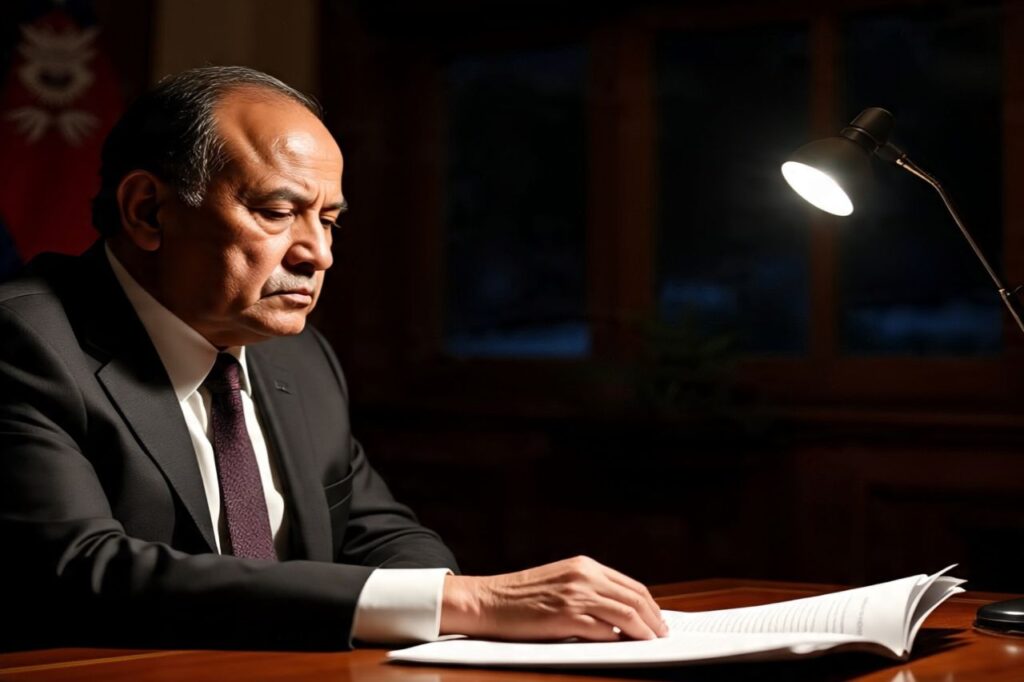
Khadga Prasad Sharma Oli, widely known as K. P. Sharma Oli, has been a towering figure in Nepalese politics for decades. A veteran leader of the Communist Party of Nepal (Unified Marxist–Leninist – CPN-UML), Oli has served as Prime Minister of Nepal four times. His leadership is noted for strong nationalist rhetoric, pro-China foreign policy, and an often confrontational approach to governance.
However, Oli’s final term ended abruptly in September 2025, when widespread protests over corruption and social media restrictions forced his resignation. His political journey — from student activism to the pinnacle of Nepalese politics and his eventual downfall — illustrates both the strengths and vulnerabilities of Nepal’s democracy.
Early Life and Political Beginnings
Born in 1952 in Terhathum district, Oli became involved in politics as a student, joining the communist movement at a young age. During the Panchayat era, when political parties were banned, he was imprisoned multiple times for his activism. These experiences shaped his political ideology and established him as a steadfast communist leader.
By the 1990s, Oli had risen through the ranks of CPN-UML, earning a reputation as a decisive leader with a strong grassroots connection. His speeches, marked by national pride and direct language, resonated with ordinary Nepalis, earning him mass support despite criticism from political rivals.
Political Career and Rise to Prime Minister
Oli’s first significant political milestone came with his appointment as Prime Minister in October 2015, following Nepal’s adoption of a new constitution. Since then, he has served three more terms:
First Term (2015–2016)
Oli’s first term coincided with Nepal’s devastating 2015 earthquake and a border blockade that caused economic hardship. His leadership during this period was marked by:
- A nationalist stance, blaming foreign interference for Nepal’s problems.
- Strengthening ties with China while managing strained relations with India.
- Efforts to implement reconstruction projects amidst severe challenges.
Second and Third Terms (2018–2021)
Returning in February 2018, Oli’s second and third terms were his longest, emphasizing:
- Infrastructure development, including roads, hydropower, and urban planning.
- Diplomacy with China and balancing relations with India.
- Centralizing administrative power, which drew criticism from opposition parties and civil society.
Despite his achievements, his third term ended in July 2021, following political disputes and intervention by Nepal’s Supreme Court.
Fourth Term (2024–2025)
In July 2024, Oli returned to power as Prime Minister for the fourth time, supported by coalition shifts and parliamentary maneuvering. This term, however, would prove to be his most controversial and shortest, culminating in his resignation in September 2025.
Leadership Style and Policies
Oli’s leadership can be characterized by:
- Nationalism: Emphasizing Nepalese sovereignty and resisting foreign influence, especially from India.
- Pro-China Orientation: Promoting trade, connectivity, and infrastructure projects with Beijing.
- Populist Communication: Engaging directly with citizens through speeches and social media, using humor and straightforward language.
- Authoritarian Tendencies: Centralizing decision-making, often bypassing consensus within his party and government institutions.
While his policies gained him popularity among some voters, they also fueled criticism for undermining democratic norms.
The 2025 Protests and Resignation
Triggering Factors
In September 2025, the Oli government banned multiple social media platforms, citing misinformation concerns. The move triggered widespread outrage, particularly among Gen Z and millennials. What started as a digital freedom protest quickly escalated into a nationwide anti-corruption movement.
Key Events
- Violent Clashes: Security forces confronted protesters, resulting in at least 19 deaths.
- Storming of Government Buildings: Protesters attacked the Parliament and set fire to government offices, including Singha Durbar.
- Oli’s Residence Targeted: Demonstrators also attempted to breach the Prime Minister’s official residence.
Faced with escalating violence and political instability, K. P. Sharma Oli resigned on 9 September 2025, stating that he was stepping down to “facilitate a political solution.”
Analysis of Oli’s Downfall
Oli’s resignation reflects broader issues in Nepalese politics:
- Loss of Public Trust: Youth and civil society criticized Oli for corruption and authoritarianism.
- Weak Democratic Institutions: The protests highlighted how fragile governance structures can collapse under public pressure.
- Generational Shift: Young Nepalis demonstrated that they can influence politics through activism and social media mobilization.
- Foreign Policy Implications: Oli’s pro-China approach leaves Nepal navigating complex regional relations after his exit.
Legacy of K. P. Sharma Oli
Despite controversies, Oli’s tenure left a mixed legacy:
Achievements:
- Navigated Nepal through the post-earthquake reconstruction period.
- Strengthened infrastructure development and urban planning initiatives.
- Elevated Nepal’s profile in international diplomacy, particularly with China.
Criticisms:
- Accusations of corruption and favoritism.
- Centralized power and undermined democratic institutions.
- Resigned under pressure amid violent protests, tarnishing his final term.
Oli’s career serves as both an inspiration and a cautionary tale — showing the heights one can achieve in Nepalese politics, but also the consequences of ignoring public accountability.
FAQs About K. P. Sharma Oli
Q1. Who is K. P. Sharma Oli?
He is a senior Nepalese politician, leader of CPN-UML, and a four-time Prime Minister of Nepal.
Q2. When did Oli serve as Prime Minister?
He served from 2015–2016, 2018–2021, and 2024–2025.
Q3. Why did K. P. Sharma Oli resign in 2025?
He resigned amid nationwide anti-corruption and pro-democracy protests triggered by a social media ban.
Q4. How many people died during the protests?
At least 19 protesters were killed in clashes with security forces.
Q5. What was Oli’s political ideology?
He is a communist with nationalist tendencies and a pro-China orientation.
Q6. What are Oli’s major achievements?
He promoted infrastructure development, post-earthquake reconstruction, and strengthened Nepal-China ties.
Q7. Why was Oli criticized?
For centralizing power, alleged corruption, and authoritarian decision-making.
Q8. What is Singha Durbar?
Singha Durbar is Nepal’s central administrative complex, housing the Prime Minister’s office and other key ministries.
Q9. How did the protests start?
The government’s social media ban sparked the protests, which later expanded into anti-corruption and pro-democracy demonstrations.
Q10. What is Oli’s legacy?
A strong nationalist and development-focused leader, but one whose authoritarian style and controversial policies led to public unrest.
Q11. How did the protests impact Nepal’s political landscape?
They highlighted the power of youth activism and social media in shaping political accountability.
Q12. Will Oli return to politics?
While his political influence remains, future returns depend on public perception, party support, and national stability.