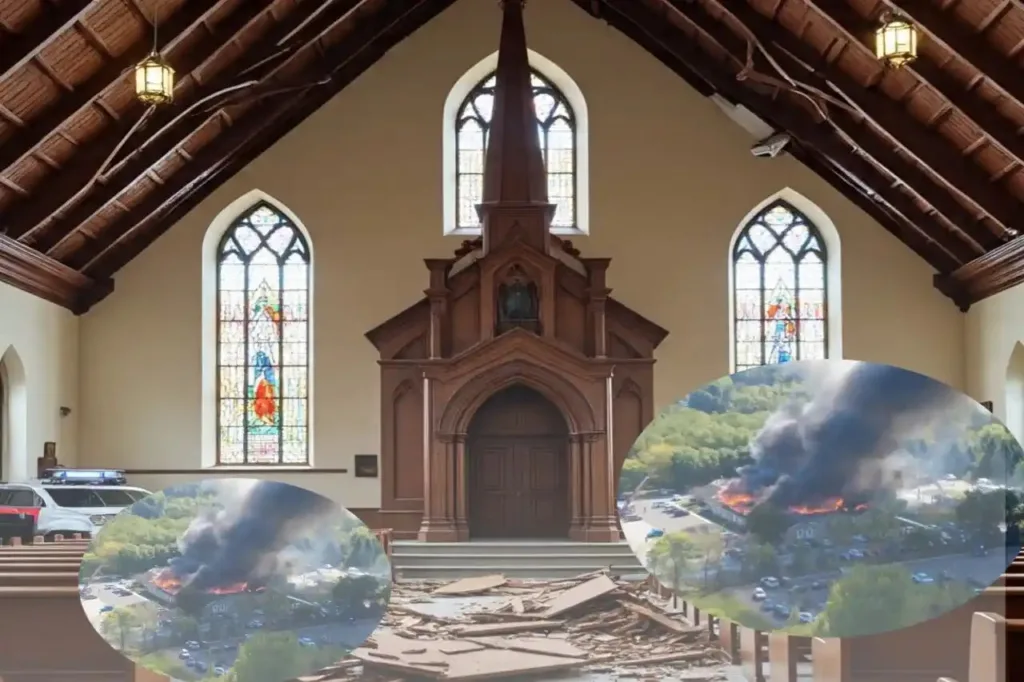
On September 28, 2025, a horrific attack unfolded at The Church of Jesus Christ of Latter-day Saints in Grand Blanc Township, Michigan, resulting in at least five deaths and eight injuries. The assailant, Thomas Jacob Sanford, a 40-year-old Iraq War veteran, drove a pickup truck into the church during Sunday services, opened fire on congregants, and set the building ablaze. The attack has left the local community and the nation in shock, prompting urgent discussions about gun safety, mental health, and security at places of worship.
The Timeline of the Attack
The tragedy began at approximately 10:25 a.m. EDT when Sanford drove his Chevrolet Silverado into the front entrance of the church. Witnesses reported hearing a loud crash, followed by gunfire as the attacker exited his vehicle. Congregants scrambled for safety as he opened fire using a semi-automatic rifle.
After the initial shooting, Sanford poured gasoline inside the church and ignited a fire, which rapidly spread. Emergency services arrived within minutes, engaging Sanford in a brief exchange of gunfire that resulted in his death at the scene. The fire caused significant structural damage, including partial collapse of the building, complicating rescue efforts.
Victims and Casualties
Authorities confirmed that four individuals were killed on-site, while one remained in critical condition at a nearby hospital. Eight others sustained injuries of varying severity, many of whom were treated for gunshot wounds and smoke inhalation.
The church, a central hub for the local community, was hosting a large congregation at the time. The attack not only claimed lives but left hundreds traumatized, witnessing an act of extreme violence in a place meant for peace and worship.
Perpetrator Background: Who Was Thomas Jacob Sanford?
Thomas Jacob Sanford, the assailant, served in the United States Marine Corps from 2004 to 2008, reaching the rank of sergeant. He participated in Operation Iraqi Freedom and was reportedly a decorated veteran.
Sanford lived in Burton, Michigan, approximately eight miles north of Grand Blanc. Reports indicate that his truck displayed an Iraq War veteran license plate and that he carried American flags during the attack. Authorities are investigating Sanford’s background to determine any personal, ideological, or psychological motives behind the assault, though none have been officially confirmed.
Experts suggest that veterans experiencing trauma can sometimes face mental health challenges if left unaddressed. While it’s unclear whether Sanford had a diagnosed condition, the incident raises questions about the support systems available for former service members.
Community Response and Mourning
The Grand Blanc Township community was left in shock after the attack. Residents quickly organized vigil gatherings and memorial services to honor the victims. Local leaders emphasized solidarity, urging the community to remain united while processing the tragedy.
Nearby churches and religious institutions increased security measures, fearing potential copycat attacks or threats. The event has also reignited debates about security at houses of worship across the United States, as congregants often gather in spaces assumed to be safe havens.
Law Enforcement and Investigation
The Federal Bureau of Investigation (FBI) has taken the lead in investigating the attack, treating it as targeted violence. Over 100 FBI agents were deployed to assist local authorities in collecting evidence from the scene, Sanford’s residence, and his digital devices.
Authorities have emphasized the need to determine a motive. While the church had not reported any prior threats, law enforcement agencies are investigating whether Sanford had connections to extremist groups, personal grievances, or mental health challenges that may have contributed to his actions.
Governor Gretchen Whitmer and President Donald Trump publicly condemned the attack. Both stressed the need to protect places of worship and provide adequate mental health and security resources to communities.
National and Media Reaction
The shooting garnered immediate national attention, with media outlets highlighting the vulnerability of religious institutions. Experts on gun violence, mental health, and veteran affairs were invited to discuss the underlying causes and preventive measures.
Social media platforms were flooded with expressions of grief, prayers, and support for the victims’ families. Hashtags like #GrandBlancStrong and #MichiganChurchShooting trended nationwide, reflecting public solidarity.
Historical Context: Violence at Places of Worship
Sadly, this is not an isolated incident. The U.S. has witnessed several attacks on religious institutions over the past decades. Events such as the Charleston church shooting in 2015, the Pittsburgh synagogue shooting in 2018, and the Texas church attack in 2017 highlight a disturbing pattern.
Experts note that places of worship, often considered safe and sacred spaces, have increasingly become targets for individuals with violent intentions. Discussions around security protocols, community preparedness, and mental health support are more relevant than ever.
Mental Health and Veteran Support
Sanford’s background as an Iraq War veteran adds another layer to the tragedy. While the majority of veterans are law-abiding citizens, studies indicate that some may experience post-traumatic stress disorder (PTSD), depression, or other mental health challenges.
Organizations such as the Veterans Affairs (VA) provide counseling and treatment programs, yet gaps remain in identifying and supporting at-risk individuals. Experts suggest that better access to mental health services could prevent tragedies linked to untreated psychological trauma.
Fire and Structural Damage
The fire set by Sanford caused significant damage to the church, leading to partial collapse. Firefighters risked their lives to contain the blaze and rescue trapped congregants.
Investigators continue to analyze the debris for evidence and to ensure no additional victims remain unaccounted for. Structural engineers have been called in to assess the building, which will likely require extensive repairs before it can reopen.
Community Healing and Memorials
In the days following the attack, the local community has come together to support victims’ families and mourn collectively. Candlelight vigils, prayer sessions, and memorial gatherings have been held across Grand Blanc Township.
Religious leaders and mental health professionals have emphasized the importance of grieving together while providing counseling to those affected, especially children and elderly congregants who witnessed the attack.
- Date: September 28, 2025
- Location: The Church of Jesus Christ of Latter-day Saints, Grand Blanc Township, Michigan
- Perpetrator: Thomas Jacob Sanford, 40, Iraq War veteran
- Fatalities: 5 (including the gunman)
- Injuries: 8
- Weapon: Semi-automatic rifle; fire set using gasoline
- Investigation: Led by FBI; ongoing
- Community Response: Vigils, memorials, increased security
National Conversations and Policy Implications
This tragedy has reignited debates about:
- Gun control laws and accessibility of semi-automatic rifles.
- Security measures at churches, synagogues, mosques, and temples.
- Veteran mental health services and community support.
- Emergency response protocols for active shooter situations.
Legislators and advocacy groups are calling for a balanced approach that respects constitutional rights while prioritizing public safety.
Survivor Stories
Several survivors recounted the chaos, describing terrifying moments of fleeing bullets and fire. Some credited quick thinking and community awareness with saving lives. Others are now receiving trauma counseling to process the psychological impact of witnessing such violence.
Stories of bravery, such as individuals helping others escape or shielding children, have emerged as beacons of hope amidst tragedy. These accounts highlight the resilience of the human spirit even in the darkest moments.
Ongoing Investigation and Unanswered Questions
Authorities are still piecing together Sanford’s motives and connections. While preliminary findings suggest he acted alone, investigators continue to examine whether outside influences or underlying grievances contributed to the attack.
The FBI and local police remain vigilant for any threats to surrounding areas, ensuring the safety of residents and congregants.
Lessons Learned and Moving Forward
The Michigan church shooting underscores the need for:
- Enhanced security at religious sites, including surveillance and emergency training.
- Improved access to mental health resources, particularly for veterans.
- Community preparedness, ensuring congregants know how to respond in emergencies.
- National dialogue on gun safety, addressing the balance between rights and public safety.
While the community mourns, these lessons may prevent future tragedies and ensure safer spaces for worship.
Conclusion
The Michigan church shooting is a tragic reminder of the vulnerability of places of worship and the ongoing challenges surrounding gun violence and mental health. The Grand Blanc community, while grieving, has demonstrated resilience and solidarity, rallying to support victims’ families and honor those who lost their lives.
As investigators continue to search for answers, the event has sparked national conversations about safety, veteran support, and preventive measures. While nothing can undo the tragedy, lessons learned from this attack may help prevent future acts of violence, ensuring that places of worship remain sanctuaries of peace and community.
FAQs.
Q1. When did the Michigan church shooting occur?
The attack occurred on September 28, 2025, at The Church of Jesus Christ of Latter-day Saints in Grand Blanc Township, Michigan.
Q2. Who was the perpetrator of the shooting?
The gunman was Thomas Jacob Sanford, a 40-year-old Iraq War veteran.
Q3. How many people were killed and injured?
At least five people died (including the gunman), and eight others were injured in the attack.
Q4. How did the attack happen?
Sanford drove a pickup truck into the church, opened fire on congregants with a semi-automatic rifle, and set the building on fire using gasoline.
Q5. Was the shooter affiliated with the church?
There is no evidence that Sanford had any affiliation with the congregation. Investigators are still examining his motives.
Q6. How did law enforcement respond?
Police responded quickly, engaging the gunman in a brief exchange of gunfire, which resulted in his death. FBI agents are leading the investigation.
Q7. Were there other threats after the attack?
Yes, several local religious institutions received bomb threats, prompting increased security in the area.
Q8. What is known about the perpetrator’s background?
Sanford served in the U.S. Marine Corps from 2004–2008 and participated in Operation Iraqi Freedom. He lived in Burton, Michigan, near Grand Blanc.
Q9. What has been the community response?
The community held vigils and memorials for the victims, increased security at local churches, and offered counseling and support to survivors.
Q10. How has the government reacted?
Governor Gretchen Whitmer and President Donald Trump condemned the attack, emphasizing the importance of protecting places of worship and supporting mental health and safety measures.
Q11. What are the ongoing investigations focused on?
Authorities are examining Sanford’s devices, residence, and personal history to determine motives and any potential connections to extremist activities.
Q12. How has the media covered the incident?
National and international media reported extensively, highlighting the tragedy, survivor accounts, and the broader issues of gun violence and security at religious sites.
Q13. Are there lessons for future safety at places of worship?
Yes. Experts recommend enhanced security measures, emergency preparedness, mental health support, and community awareness to help prevent similar incidents.
Q14. What long-term impact has this shooting had?
The shooting has sparked national discussions on gun safety, veteran mental health, and the security of religious institutions, while the community mourns and seeks healing.
Q15. How can people support the victims and community?
Support can include donations to memorial funds, participation in vigils, volunteering for counseling services, and advocating for safer communities.