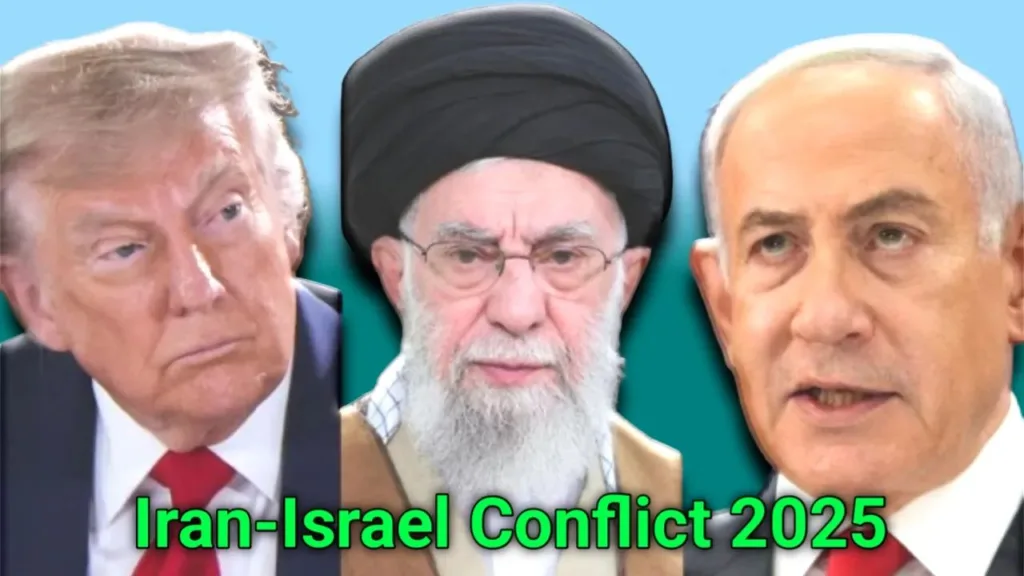
The world is watching as tensions between Iran and Israel escalate, despite a recently announced ceasefire. Just hours after US President Donald Trump declared a “complete and total ceasefire,” Iran launched missiles into Israeli territory, triggering a new wave of conflict. With retaliatory strikes from Israel and an announcement of upcoming US-Iran talks, the geopolitical landscape is shifting rapidly. This post provides live updates and a detailed breakdown of the Iran-Israel conflict, its global implications, and the path forward.
Iran-Israel Conflict: Ceasefire Declared, Then Broken
A Fragile Peace Shattered Within Hours
On Monday, after 12 intense days of hostilities, US President Donald Trump declared a phased “complete and total ceasefire” between Iran and Israel. The ceasefire was meant to be a turning point following a series of high-stakes military confrontations, including a US-led strike on Iran’s nuclear facilities.
However, this moment of peace proved fleeting. Just hours after the truce was meant to take effect, Iran launched ballistic missiles into Israel, breaching the agreement and reigniting the flames of war. Sirens echoed across Israeli cities, including Be’er Sheva, where four civilians lost their lives.
Israel’s Response: “Forceful” Retaliation Ordered
Israel Vows to Strike Back Harder
In response to Iran’s breach of the ceasefire, Israeli Defence Minister Israel Katz announced a series of retaliatory airstrikes targeting key Iranian regime sites in Tehran. He declared, “The Israel Defence Forces will respond forcefully to Iran’s violation of the ceasefire with intense strikes.”
This marked a significant escalation, shifting the conflict from missile exchanges to direct confrontations in the Iranian capital. Katz also signed a decree labelling Iran’s central bank and other financial institutions as terrorist organisations, aiming to cripple Iran’s economic capabilities and terror financing systems.
Also Read:- The Story Of Karbala
Human Toll Rises: Deaths and Arrests on Both Sides
Tragedy in Be’er Sheva and Gaza
The missile strikes have already taken a human toll:
• Four civilians were killed in Be’er Sheva due to Iranian missile strikes.
• Seven Israeli soldiers lost their lives when their armoured vehicle was struck by an explosive near Khan Younis in southern Gaza.
• Iran reported over 700 arrests for alleged “wartime ties” with Israel, including executions of three suspected Mossad agents.
These numbers paint a grim picture of escalating violence and growing civilian casualties on both sides.
US-Iran Talks Scheduled Amidst Chaos
Trump’s Surprising Announcement
Amid the chaos, President Donald Trump confirmed that the US will engage in direct talks with Iran “next week.” He mentioned the possibility of a nuclear agreement, although he remained noncommittal, saying, “We may sign an agreement. I don’t know.”
This announcement came despite his earlier claim that US strikes had caused “total obliteration” of Iran’s nuclear facilities, likening the impact to the atomic bombings of Hiroshima and Nagasaki.
His controversial comparison raised eyebrows globally, but also underscores the scale of destruction Washington believes it has inflicted on Iran’s nuclear programme.
Also Read:- I Am Malala: A Voice That Rose Against Bullets and Silence
Nuclear Fallout: Iran’s Programme Set Back “Many Years”
Damage Confirmed by Both Sides
The White House released a statement quoting the Israel Atomic Energy Commission, claiming that Iran’s nuclear programme has been set back “many years.”
Iran has reluctantly confirmed these assessments, with its Foreign Ministry admitting that their nuclear installations were “badly damaged” by the US strikes.
Adding to the tension, Iran’s Parliament is now pushing back against international inspectors, seeking to suspend cooperation with the International Atomic Energy Agency (IAEA) unless Iran’s nuclear site security is guaranteed.
India’s Role: Moral Support for Iran
A Diplomatic Twist in South Asia
In an unexpected development, Iran has expressed deep gratitude to the Indian public, political figures, and civil society groups for their moral support during the 12-day war.
In a post shared by the Iranian Embassy in New Delhi, Tehran thanked the “noble and freedom-loving people of India” for standing in solidarity.
This diplomatic note highlights the increasing significance of India’s voice in Middle Eastern geopolitics, as well as the complex alliances forming in response to the Iran-Israel conflict.
Global Reactions: What This Means for the World
Rising Tensions Across the Region
The renewed hostilities have caused a ripple effect across the region:
• Oil prices have surged, reflecting fears of disruptions in the Strait of Hormuz.
• International flights to the Middle East are being rerouted due to safety concerns.
• The UN Security Council is expected to convene an emergency session, with members divided on condemning Iran versus supporting calls for restraint.
US’s Double Game?
Trump’s stance — striking Iran yet offering to talk — has left many questioning the true intentions of US foreign policy. Is this a negotiation tactic or a strategic retreat?
While some analysts see it as a way to force Iran back to the negotiating table, others warn it could destabilise the Middle East further and lead to a broader war.
Also Read:- FIFA Club World Cup 2025: Suarez Strikes, Messi Misses as Inter Miami Draw 2-2 with Palmeiras
What’s Next? Three Possible Scenarios
1. Diplomatic Breakthrough
If the upcoming US-Iran talks bear fruit, there could be a fresh nuclear agreement that reins in Iran’s ambitions while offering sanctions relief — a diplomatic win for all sides.
2. Widening War
If ceasefire breaches continue, Israel may escalate further, possibly dragging Lebanon, Syria, or even the Gulf states into the conflict — leading to a full-blown regional war.
3. Cold Peace and Proxy Battles
A third possibility is a temporary cooling down of direct conflict, with both nations engaging in proxy warfare through militias and cyber attacks, keeping tensions simmering below the surface.
Conclusion: A Crisis at the Crossroads
The Iran-Israel conflict remains a volatile flashpoint in global politics. While the ceasefire offered hope, its rapid breakdown shows how fragile peace can be in a region riddled with mistrust and unresolved grievances.
With US-Iran talks on the horizon, the coming week could determine whether the world moves toward peaceful resolution or plunges into deeper conflict. One thing is certain — the stakes have never been higher.