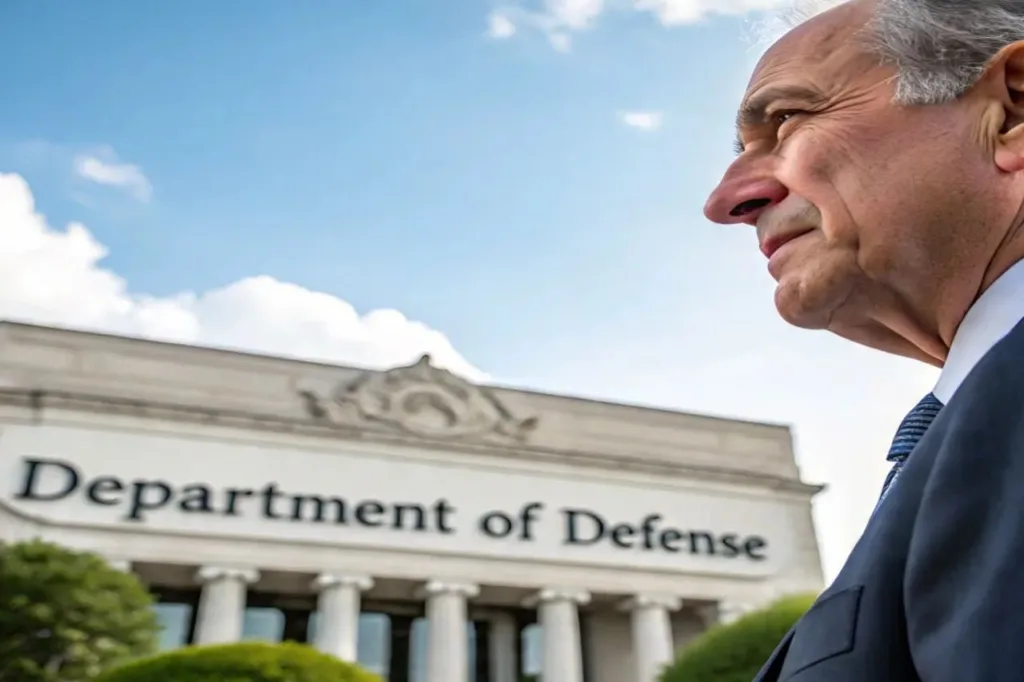
The United States military establishment has undergone a symbolic yet politically charged transformation. In early September 2025, President Donald Trump signed an executive order directing that the Department of Defense (DoD) be referred to once again as the Department of War. While the legal name remains unchanged unless Congress acts, this bold rebranding has sparked a national conversation. Supporters see the change as an overdue return to the Pentagon’s core mission: winning wars. Critics, however, view it as a superficial shift with potentially far-reaching consequences.
Among the most vocal supporters is Senator Josh Hawley (R–Missouri), who praised the move as “getting back to mission.” For him and other advocates of the DoD rebranding, the adjustment represents more than words on paper—it signals a renewed focus on strength, clarity, and America’s warrior ethos.
The Background of DoD Rebranding
The DoD rebranding stems directly from President Trump’s executive order on September 5, 2025. Signed during a ceremony at the White House, the directive instructed government agencies, military communications, and official Pentagon channels to use the title “Department of War.” The president framed the shift as part of his broader national security strategy, emphasizing victory, readiness, and “removing the distractions of woke policies.”
The decision also reflects Trump’s long-standing belief that words shape perception. By invoking the “Department of War,” the administration seeks to highlight offensive strength rather than a defensive stance. Historically, the Pentagon was called the War Department until 1949, when President Harry Truman’s reforms gave birth to the Department of Defense to align with Cold War realities. Now, Trump’s DoD rebranding effectively rewinds that clock.
Secretary Pete Hegseth and the ‘Warrior Ethos’
The rebranding has been championed by Secretary of Defense—now styled “Secretary of War”—Pete Hegseth. A former Army officer and media commentator, Hegseth framed the DoD rebranding as necessary to “restore a warrior ethos” across the military ranks. In his remarks, he noted that the Department had drifted toward bureaucracy and social engineering rather than focusing on readiness and lethality.
According to Hegseth, “We are not in the business of social experiments; we are in the business of war.” He argued that the DoD rebranding will help signal to both allies and adversaries that America is serious about projecting hard power.
Senator Josh Hawley: ‘Getting Back to Mission’
On Fox News’ The Ingraham Angle, Senator Josh Hawley applauded the rebrand, framing it as a course correction after what he described as years of misplaced priorities under the Biden administration. For Hawley, the DoD rebranding is not merely symbolic but practical. He believes it reasserts the military’s main task—winning wars and defending the nation’s interests through strength.
“Calling it the Department of War makes the mission unmistakable,” Hawley said. “It’s about victory, not about distraction.” His comments resonate with many conservatives who have criticized previous Pentagon leadership for focusing on diversity initiatives, climate policy, and other issues they view as secondary to combat readiness.
Supporters vs. Critics of DoD Rebranding
The DoD rebranding has quickly polarized Washington.
Supporters argue:
- It brings clarity and honesty to the Pentagon’s mission.
- It honors the nation’s historical roots and past victories.
- It reinforces deterrence by projecting strength to adversaries.
- It corrects what they see as years of ideological drift.
Critics argue:
- The rebranding is cosmetic, doing little to address genuine readiness or modernization issues.
- It may alienate allies who prefer cooperative security frameworks.
- It risks inflaming public opinion by appearing more aggressive.
- It distracts from pressing concerns like cyber defense, recruitment shortfalls, and budget allocations.
This tension highlights the broader debate over America’s military posture in a changing global order.
Historical Context: From War to Defense and Back Again
The DoD rebranding brings into focus the long history of America’s military identity. The Department of War was one of the country’s original Cabinet positions, overseeing U.S. armed forces from 1789 until the end of World War II. Its renaming to the Department of Defense in 1949 was deliberate—an effort to project strength without aggression during the tense Cold War years.
By reviving the “Department of War” language, Trump’s DoD rebranding deliberately invokes a past era of unapologetic military might. Supporters say it reminds Americans of World War II’s decisive victories. Critics counter that the Cold War logic—emphasizing deterrence and defense—remains more relevant in today’s complex security environment.
Implications for U.S. Military Strategy
The DoD rebranding may seem like a semantic change, but words influence both policy and perception. Analysts suggest the move could:
- Influence military culture: Renewed emphasis on combat readiness over administrative goals.
- Shape foreign policy messaging: Adversaries may view the change as a signal of American assertiveness.
- Impact recruitment and morale: Some troops may feel reinvigorated, while others may worry about increased politicization.
- Guide budget debates: Lawmakers could leverage the rebrand to justify higher spending on conventional weapons and combat operations.
In practical terms, though, the Pentagon still faces the same challenges: competing with China and Russia, managing Middle East instability, addressing cyber threats, and maintaining technological superiority.
Domestic Reaction and Global Perceptions
Inside the United States, the DoD rebranding has energized political debates. Trump supporters and right-leaning media celebrated the change as a bold, patriotic step. Progressives and many defense experts criticized it as an empty gesture that risks making the U.S. appear more aggressive.
Globally, allies have reacted cautiously. NATO officials acknowledged the shift but emphasized that what matters most is continued U.S. commitment to collective defense. Rival powers such as China and Russia, meanwhile, portrayed the rebranding as proof that Washington seeks confrontation rather than cooperation.
The Future of DoD Rebranding
The DoD rebranding may remain in symbolic limbo until Congress takes action. Legally, the Department of Defense is still the official name. However, the administration’s directive ensures that “Department of War” will appear in speeches, press releases, and perhaps even Pentagon signage.
The long-term impact of the change will depend on whether it is matched by tangible improvements in military readiness, funding, and operations. If not, the DoD rebranding risks being remembered as a headline rather than a genuine reform.
FAQs on DoD Rebranding
Q1. What is the DoD rebranding about?
The DoD rebranding refers to President Donald Trump’s executive order directing the Department of Defense to be referred to as the “Department of War.”
Q2. Is the name change to Department of War official?
Legally, the Department of Defense remains its official name unless Congress passes new legislation. The current rebranding is symbolic but widely adopted in official communications.
Q3. Why did President Trump push for DoD rebranding?
Trump argued that “Department of War” better reflects the military’s mission to win wars and emphasizes strength over defense.
Q4. Who is Pete Hegseth and what is his role in DoD rebranding?
Pete Hegseth, Secretary of Defense (styled “Secretary of War”), strongly supports the rebranding, calling it a way to restore the warrior ethos in the U.S. military.
Q5. Which lawmaker praised DoD rebranding as ‘getting back to mission’?
Senator Josh Hawley (R–Missouri) supported the rebrand, saying it restores focus on the Pentagon’s true mission: victory.
Q6. When was the Department of Defense first created?
The Department of Defense was formed in 1949, replacing the earlier Department of War to project a defensive posture during the Cold War.
Q7. What are supporters saying about DoD rebranding?
Supporters claim it provides clarity, reinforces deterrence, and restores focus on combat readiness and victory.
Q8. Why are critics opposed to DoD rebranding?
Critics argue it’s mostly symbolic, risks alienating allies, and distracts from urgent issues like modernization and cyber defense.
Q9. How could DoD rebranding affect global perceptions?
Allies may see it as a cosmetic change, but adversaries like China and Russia could interpret it as an aggressive U.S. posture.
Q10. Will DoD rebranding change military strategy?
While the wording may influence culture and messaging, actual strategy will depend on budgets, modernization, and geopolitical realities.
Q11. Does DoD rebranding affect military recruitment?
It could inspire some service members who embrace warrior ethos, but others may see it as overly politicized.
Q12. What is the future of DoD rebranding?
Unless Congress acts, it will remain symbolic, but its cultural and political impact could last throughout the Trump administration.
Read More:-Pakistan vs Afghanistan 2025: A Thrilling Contest That Captured Global Attention