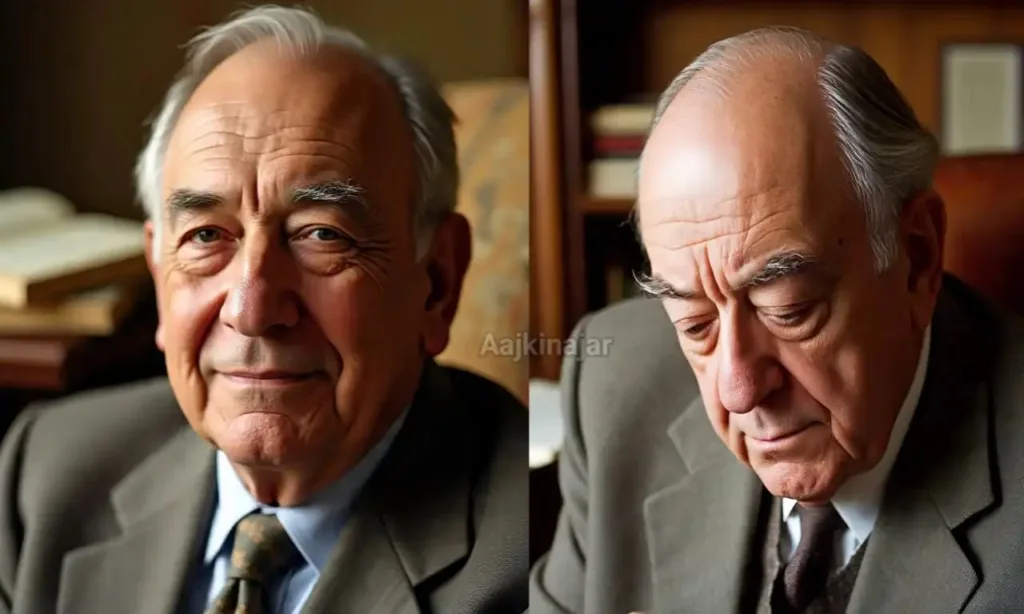
When it comes to English literature of the 20th century, few names stand as tall as Graham Greene. A novelist, screenwriter, journalist, and critic, Greene carved a niche that blended storytelling with politics, faith, espionage, and human psychology. Even decades after his death in 1991, his works continue to attract readers, researchers, and filmmakers. New discussions around his novels, his political insights, and his influence on modern literature keep him alive in cultural debates.
In this article, we dive deep into Graham Greene’s life, his literary works, recurring themes, and why he remains a fresh topic of interest in 2025.
Early Life and Education
Henry Graham Greene was born on October 2, 1904, in Berkhamsted, Hertfordshire, England. He was the fourth of six children in a well-to-do family. His father, Charles Greene, was the headmaster of Berkhamsted School, where Graham studied. But Greene’s childhood wasn’t particularly smooth—he battled depression, feelings of isolation, and even attempted suicide as a teenager.
To cope with his emotional struggles, Greene turned to books, adventures, and later, psychoanalysis. These experiences shaped his understanding of human vulnerability and inner conflict, themes that would later dominate his novels.
He studied at Balliol College, Oxford, where he read history. His time at Oxford was transformative—Greene published poems, edited journals, and began experimenting with writing styles.
From Journalism to Novelist
After graduating, Greene worked as a journalist with The Times. Journalism gave him sharp observational skills and a taste for political and international affairs. His first novel, The Man Within (1929), was moderately successful. But it was with works like Stamboul Train (1932) and Brighton Rock (1938) that Greene established himself as a master storyteller.
Greene had a knack for weaving thriller-like plots with deep moral and religious questions. This rare combination earned him popularity not only with general readers but also with critics.
Greene and Catholicism
One of the most discussed aspects of Greene’s writing is his Catholic faith. After marrying Vivien Dayrell-Browning, he converted to Catholicism in 1926. His conversion wasn’t just personal—it influenced much of his literary work.
Novels like The Power and the Glory (1940) and The Heart of the Matter (1948) dealt directly with questions of sin, redemption, and human weakness. Greene often explored the struggles of flawed individuals caught between faith and temptation.
This gave rise to the term “Catholic Novelist,” though Greene himself resisted the label. He considered himself a writer who happened to be Catholic, rather than a religious writer.
Espionage, Politics, and International Affairs
Greene’s career as a writer was closely linked to his work as a spy and traveler. During World War II, he worked with the British Secret Intelligence Service (MI6). His time in Sierra Leone and other postings inspired his espionage thrillers, most notably The Quiet American (1955), which examined U.S. involvement in Vietnam.
Through these experiences, Greene became a sharp critic of colonialism, power struggles, and political corruption. His books combined spy fiction with moral philosophy, making them more than just adventure tales.
Key Works of Graham Greene
Greene’s literary output was vast. Some of his most influential works include:
- Brighton Rock (1938): A crime thriller about youth, violence, and morality in an English seaside town.
- The Power and the Glory (1940): A story of a “whiskey priest” struggling with faith during religious persecution in Mexico.
- The Heart of the Matter (1948): A tale of duty, guilt, and betrayal set in West Africa.
- The End of the Affair (1951): A semi-autobiographical love story exploring obsession, jealousy, and religion.
- The Quiet American (1955): A political novel about Vietnam, foreshadowing U.S. involvement in the war.
- Our Man in Havana (1958): A satirical take on espionage, where a vacuum cleaner salesman becomes a spy.
Each of these works reflects Greene’s unique ability to balance gripping plots with philosophical depth.
Greene in Cinema
Another reason Graham Greene remains relevant is his close relationship with cinema. Several of his novels were adapted into successful films. For instance, The Third Man (1949), though originally written as a screenplay, became one of the greatest British films ever made.
Movies like Brighton Rock and The End of the Affair have been adapted multiple times, proving that Greene’s stories still resonate with audiences worldwide.
Fresh Insights: Why Graham Greene Still Matters in 2025
Even decades later, Greene continues to inspire debates among literary critics, political analysts, and readers. Here’s why his relevance remains fresh today:
- Global Politics & Espionage: In today’s era of international conflicts, espionage scandals, and shifting superpowers, Greene’s novels about spy games and political deception feel eerily modern.
- AI & Morality Debates: With technology raising ethical questions, Greene’s exploration of morality, faith, and guilt speaks to current dilemmas.
- Adaptations and Biographies: New documentaries, critical biographies, and digital adaptations of his works keep his name in public discussions.
- Universality of Human Struggles: His exploration of human weakness, betrayal, and redemption resonates across generations.
Graham Greene’s Legacy
Greene’s career spanned over six decades, producing more than 25 novels, numerous short stories, plays, screenplays, and essays. He was shortlisted for the Nobel Prize in Literature multiple times but never won, a fact that still puzzles many scholars.
He died in 1991 in Switzerland, but his reputation as one of the greatest English novelists of the 20th century remains unchallenged.
FAQs
Q1. Who was Graham Greene?
Graham Greene was an English novelist, journalist, screenwriter, and critic, best known for works that combined thriller plots with deep moral and political questions.
Q2. What are some famous books by Graham Greene?
His most famous books include Brighton Rock, The Power and the Glory, The Heart of the Matter, The End of the Affair, The Quiet American, and Our Man in Havana.
Q3. Why is Graham Greene called a Catholic novelist?
Greene converted to Catholicism in 1926, and many of his novels explore faith, sin, and redemption. However, he preferred being seen as a writer who was Catholic, not a religious novelist.
Q4. Did Graham Greene work as a spy?
Yes. Greene worked for MI6 during World War II, and his experiences influenced his espionage novels like The Quiet American.
Q5. Why is Graham Greene still relevant today?
His themes of politics, espionage, morality, and human struggles remain timeless. His works continue to be studied, adapted into films, and referenced in discussions about global affairs.
Q6. Did Graham Greene win the Nobel Prize in Literature?
No. Although nominated several times, Graham Greene never received the Nobel Prize, which remains a debated topic among literary critics.
Q7. What films are based on Graham Greene’s works?
Notable adaptations include Brighton Rock, The End of the Affair, The Quiet American, and The Third Man, which Greene originally wrote as a screenplay.