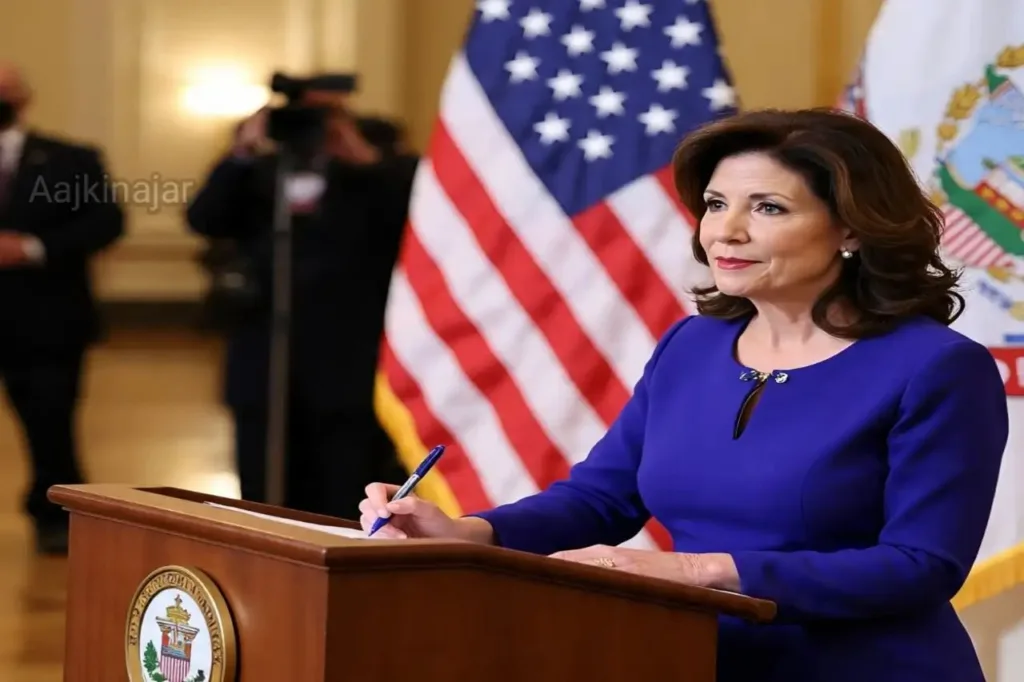
In a bold step to expand access to lifesaving healthcare, New York Governor Kathy Hochul has signed an executive order that allows residents across the state to get COVID-19 vaccines at pharmacies without needing a doctor’s prescription. The decision, announced in September 2025, marks a significant pushback against newly issued federal restrictions and is already being hailed as a landmark moment in public health governance.
The move comes at a critical time. As COVID-19 cases show signs of rising once again in certain areas and with new variants under observation, state leaders argue that accessibility—not barriers—should guide the nation’s pandemic response. Hochul’s executive order makes it clear that, at least in New York, pharmacies will remain front-line providers of vaccination.
Why Governor Hochul Issued the Order
The immediate trigger for Hochul’s executive action was new FDA guidance that narrowed eligibility for updated COVID-19 vaccines. Under the federal rules, only certain high-risk groups—such as people aged 65 and older, young children with underlying conditions, and those with serious immune vulnerabilities—were automatically eligible for the latest shots. Everyone else was required to obtain a prescription from a physician.
This change created sudden complications. Pharmacies like CVS and Walgreens began requiring patients to show prescriptions, causing confusion and delays. Many families arrived expecting a quick appointment, only to be turned away.
Governor Hochul described these restrictions as both “short-sighted and dangerous” for public health. She declared the situation a state disaster emergency and signed an executive order allowing New Yorkers to bypass the federal barriers.
What the Executive Order Does
The new executive order empowers pharmacists statewide to:
- Prescribe and administer COVID-19 vaccines directly to patients.
- Provide vaccinations to anyone aged 3 years and older, without the need for a doctor’s prescription.
- Rely on a standing order from State Health Commissioner Dr. James McDonald, ensuring uniform statewide rules.
The order is initially valid for 30 days, but it can be renewed if the state legislature does not pass a permanent law before it expires. Hochul has pledged to work with lawmakers to secure a long-term fix.
Making Vaccines More Accessible
Public health experts emphasize that one of the biggest lessons of the COVID-19 pandemic has been the importance of convenient, widespread vaccine access. During the early rollouts in 2021 and 2022, pharmacies played a crucial role, administering millions of shots quickly and efficiently.
By restoring the ability of pharmacists to both prescribe and administer the vaccine in one visit, the order removes unnecessary hurdles. Patients can walk into their neighborhood pharmacy and walk out vaccinated—no appointments with doctors, no delays, and no added costs.
State officials also confirmed that insurance providers, including Medicaid, are expected to cover the shots, ensuring that cost will not be a barrier for families.
Federal vs. State: A Growing Divide
Hochul’s order highlights a widening policy divide between federal health agencies and several Democratic-led states.
- The Federal View: Federal health officials argue the new restrictions ensure vaccines go to those who need them most. They say primary care providers are best positioned to assess whether individuals outside high-risk groups should get the shot.
- The State Pushback: Hochul and other governors counter that the limitations are unnecessarily restrictive, confusing, and harmful to overall vaccine uptake.
Health and Human Services (HHS) officials criticized New York’s executive order, calling it “misguided” and warning it could undermine federal vaccine strategy. But Hochul stood firm, framing the issue as one of equity and urgency.
“If Washington won’t lead,” she said, “then New York will step up to protect its families.”
Impact on New Yorkers
For millions of New Yorkers, the order is a relief. Parents worried about protecting children heading back to school, young adults looking to stay up-to-date with boosters, and essential workers who cannot afford to wait for doctor’s visits now have a clear path to vaccination.
Pharmacies across the state are expected to see a surge in demand. Industry groups welcomed the decision, noting that pharmacists are highly trained professionals capable of safely administering vaccines.
In rural areas where access to healthcare providers is limited, the order could make a particularly significant difference. Pharmacies often serve as the most accessible healthcare hubs for small communities.
Supporters Applaud the Move
Healthcare organizations, advocacy groups, and many New Yorkers praised the executive action.
- Public Health Experts called it a common-sense move that ensures no one is left unprotected during a vulnerable time.
- Pharmacy Associations highlighted the role of pharmacists as frontline workers who have already proven their ability to handle mass vaccination campaigns.
- Community Leaders stressed the importance of equity, noting that underserved neighborhoods are often disproportionately impacted by both the virus and limited healthcare access.
Critics Raise Concerns
Not everyone is on board. Some federal officials and political opponents argue that Hochul’s order risks creating legal conflicts and could potentially confuse patients if federal and state guidance remains out of sync.
Others worry about whether pharmacies will have enough supply to meet the sudden increase in demand. However, state officials reassured residents that vaccine distribution networks are prepared.
A Step Toward State-Level Independence
Hochul’s executive order also carries symbolic weight. It signals a willingness by states to assert independence in public health policy, particularly when they believe federal action is insufficient or counterproductive.
New York is not alone. Other states—including California and Massachusetts—are reportedly considering similar measures. Together, these moves suggest a growing state-led resistance to federal limits on vaccine distribution.
Looking Ahead
The executive order is temporary, but its long-term impact could be substantial. If New York lawmakers pass a permanent bill, it could set a model for other states to follow.
For now, the focus remains on ensuring smooth implementation. Pharmacies are mobilizing, state health officials are coordinating logistics, and New Yorkers are being urged to take advantage of the expanded access.
As the debate over vaccine policy continues, one thing is clear: Governor Hochul’s decision underscores the ongoing tension between federal oversight and state responsibility in America’s healthcare system.
Conclusion
Governor Kathy Hochul’s decision to sign an executive order making COVID-19 vaccines available at pharmacies without a prescription is a bold move that puts accessibility and public health first. By cutting through bureaucratic red tape, the order empowers pharmacists, helps families, and challenges restrictive federal policies.
Whether this becomes a turning point in vaccine policy or a temporary measure, it is already reshaping the conversation about how states can—and should—respond when national strategies fall short. For New Yorkers, it means one thing above all: faster, easier access to the protection they need.
FAQs
1. What does Governor Hochul’s executive order do?
It allows New Yorkers aged 3+ to receive COVID-19 vaccines at pharmacies without needing a doctor’s prescription.
2. Why was this order issued?
It was a response to new federal restrictions that limited vaccine eligibility and created confusion at pharmacies.
3. How long will the order last?
The order is valid for 30 days but can be renewed or replaced with a permanent state law.
4. Can pharmacists really prescribe vaccines?
Yes, under the executive order, pharmacists are authorized to both prescribe and administer COVID-19 shots.
5. Who pays for the vaccine?
Insurance, including Medicaid, is expected to cover the costs, according to state officials.
6. What are the age requirements under the order?
Anyone aged 3 and older can receive the vaccine at pharmacies.
7. How does this differ from federal rules?
Federal guidance required many people to get prescriptions from doctors, while New York allows pharmacists to bypass that step.
8. What has been the federal response?
HHS officials criticized the order, calling it misguided, but New York leaders argue it’s essential for public health.
9. Will this create confusion for patients?
Some critics worry it might, but state health officials are coordinating efforts to provide clear guidance.
10. Are other states considering similar actions?
Yes, states like California and Massachusetts are exploring similar measures to expand vaccine access.
11. What role do pharmacies play in vaccination campaigns?
Pharmacies have been vital in administering millions of shots quickly and efficiently during the pandemic.
12. Could this lead to permanent changes in healthcare law?
If lawmakers pass supportive legislation, pharmacists could remain authorized to prescribe vaccines long-term.
Read More:-Kerala Govt Never Wrote to Centre on Contributory Pension Withdrawal: RTI Revelation