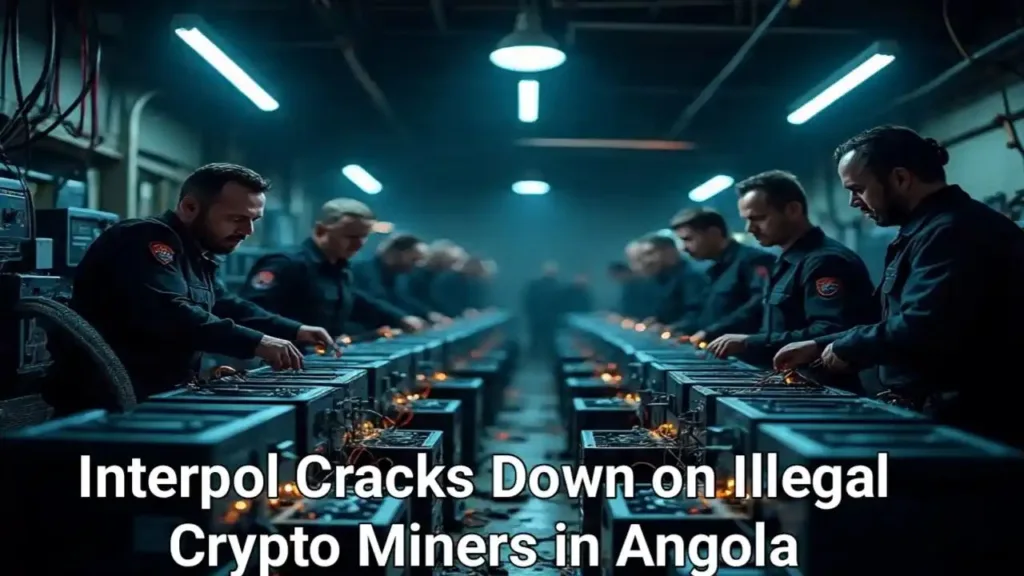
A Global Operation Reaches Africa
When we hear about cryptocurrency crackdowns, our minds often jump to China or the U.S. But the latest major action didn’t happen in Silicon Valley or Beijing—it happened in Angola, a country in southern Africa that has been quietly struggling with an explosion of illegal crypto-mining operations.
In August 2025, INTERPOL, the world’s largest international police organization, wrapped up Operation Serengeti 2.0—a coordinated cybercrime sweep across 18 African countries and the United Kingdom. The operation led to 1,209 arrests and recovered nearly $100 million from online frauds and crypto-related schemes.
One of the biggest stories from the operation came out of Angola, where police, backed by INTERPOL, raided 25 illegal crypto-mining centers. These weren’t small setups run by tech-savvy kids in their garages. Authorities say most of the mines were run by Chinese nationals operating industrial-scale rigs. In total, 60 people were arrested, and over $37 million worth of mining equipment was seized.
But why is Angola cracking down so hard on mining? And what does this mean for the future of crypto globally? Let’s break it down.
Why Angola Banned Crypto Mining
Back in April 2024, Angola passed Law No. 3/24, which made it a criminal offense to mine cryptocurrency in the country. The law didn’t outlaw crypto itself—Angolans can still own or trade Bitcoin—but it did ban the process of mining.
The reason was simple: electricity.
Crypto mining requires enormous amounts of power. Mining rigs—basically giant warehouses of computers solving complex math problems to unlock new crypto coins—eat up electricity like small cities. For a developing country like Angola, where the national grid already struggles to meet demand, crypto mining was becoming a national threat.
The law carried tough penalties:
- 1 to 5 years in prison for just possessing mining equipment.
- 3 to 8 years for anyone misusing power licenses to run mining farms.
- 3 to 12 years for connecting mining equipment directly to the national grid.
On top of prison time, all equipment is confiscated, and violators face heavy fines.
China’s Warning to Its Citizens
Interestingly, much of the illegal mining activity in Angola was run by Chinese citizens. After Angola announced its ban in 2024, the Chinese Embassy in Luanda issued a strong warning to its nationals living in the country:
“Do not support or engage in virtual currency mining activities. Do not provide venues, electricity, or storage facilities for such operations.”
The embassy’s message wasn’t random. China itself banned crypto mining back in 2021, citing the same concerns over electricity use and financial risk. Many Chinese miners moved their operations overseas, often setting up shop in countries with cheap power and looser regulations. Angola, with its growing ties to China and relatively low electricity costs, became one such destination.
The Raids: 25 Mining Farms Shut Down
Fast forward to this summer. As part of INTERPOL’s Operation Serengeti 2.0, Angolan authorities swept through multiple provinces, raiding 25 different mining centers.
The numbers tell the story:
- 25 sites dismantled
- 60 suspects arrested (all Chinese nationals, according to officials)
- $37 million in equipment seized
The seized machines—mostly advanced mining rigs and cooling systems—won’t just be destroyed. Angola says it plans to repurpose the hardware to strengthen its national power grid, a move meant to redirect resources back to ordinary citizens who have faced blackouts and power shortages.
Interpol’s Bigger Picture: Cybercrime Across Africa
The crackdown in Angola wasn’t an isolated event. It was just one piece of INTERPOL’s continent-wide cybercrime fight.
Here’s what Operation Serengeti 2.0 accomplished overall:
- 1,209 people arrested across 18 countries and the U.K.
- $97.4 million recovered from cyber frauds and scams
- Busts included a $300 million online fraud ring in Zambia that tricked over 65,000 victims worldwide
Crypto-related crimes have been rising sharply across Africa. From illegal mining in Angola to investment fraud in Zambia, criminals are increasingly using digital assets as tools to scam, launder, or steal money. INTERPOL’s operation was designed to hit multiple layers of this problem.
Why This Matters Beyond Angola
You might be wondering: Why should people in the U.S. care about crypto miners in Angola? Here’s why:
- Global Energy Impact
Crypto mining isn’t just a local problem. Every mining hub—whether in Texas, Kazakhstan, or Angola—affects global energy use. As more countries ban or regulate mining, operations shift elsewhere, creating a “whack-a-mole” effect. - International Crime Networks
These weren’t just local miners. The fact that Chinese nationals were heavily involved in Angola’s mining industry shows how international the crypto-mining business has become. What happens in Angola can connect directly to global financial flows. - U.S. Policy Connections
The U.S. has also been grappling with how to regulate mining. States like New York have passed moratoriums, while Texas has become a hotspot for miners due to cheap energy. What’s happening in Angola echoes many of the same debates Americans are having about whether mining is worth the strain on power grids. - Law Enforcement Cooperation
INTERPOL’s success in Africa shows that cybercrime is increasingly being fought on a global scale. For U.S. law enforcement, that means more collaboration across borders—and potentially more pressure on crypto operations that skirt regulations.
Angola’s Energy Challenge
At the heart of Angola’s mining crackdown is a very human problem: keeping the lights on.
Despite being one of Africa’s largest oil producers, Angola has long struggled with reliable electricity. Many households and businesses face rolling blackouts. The government argued that crypto mining was siphoning power away from ordinary citizens.
By repurposing seized equipment to support power distribution, Angola is sending a message: energy is for people, not for mining coins.

The Future of Mining in Africa
Angola isn’t alone in banning mining. Other countries across Africa, such as Morocco and Algeria, have taken strict stances on crypto. Meanwhile, countries like Nigeria have leaned into digital assets, promoting regulated exchanges while trying to curb fraud.
For Africa, the challenge is balancing innovation with stability. Crypto and blockchain technology hold potential for financial inclusion across the continent, but unchecked mining and scams threaten already fragile infrastructures.
What It Means for Crypto Investors
If you’re a crypto enthusiast or investor in the U.S., stories like Angola’s crackdown might seem distant. But they shape the global crypto landscape in several ways:
- Mining costs may rise as countries restrict where rigs can operate.
- Regulators are watching closely; energy use is becoming a key part of crypto regulation worldwide.
- Crypto perception continues to swing between innovation and crime, depending on which headlines dominate.
Final Thoughts
The Angolan mining crackdown is more than just a local news story—it’s a reminder that crypto doesn’t exist in a vacuum. From power grids in Africa to policy debates in Washington, the future of digital assets is tied to very real, very physical challenges.
For Angola, the message is clear: crypto mining is illegal, and those who break the rules will face steep consequences. For INTERPOL, the operation shows that fighting cybercrime requires international teamwork. And for the rest of us, it’s another sign that the crypto world is entering a new phase—one where energy, legality, and global cooperation matter as much as technology and profit.
FAQs.
Q1: Why did Angola ban crypto mining in 2024?
Angola banned crypto mining in April 2024 under Law No. 3/24 due to massive electricity consumption. Mining farms were straining the national power grid, causing blackouts and shortages for ordinary citizens.
Q2: Is cryptocurrency illegal in Angola?
No, Angola has not banned cryptocurrency ownership or trading. The ban only applies to mining activities, which involve using computer rigs to generate digital coins.
Q3: What was Operation Serengeti 2.0?
Operation Serengeti 2.0 was an INTERPOL-led cybercrime sweep across 18 African countries and the U.K., resulting in over 1,200 arrests and $97 million recovered.
Q4: How many crypto mines were shut down in Angola?
Authorities dismantled 25 illegal mining sites in Angola, arresting 60 suspects and seizing over $37 million worth of equipment.
Q5: Who were the suspects in Angola’s crypto crackdown?
According to officials, the majority of those arrested in Angola were Chinese nationals who had set up large-scale mining operations despite the nationwide ban.
Q6: What will Angola do with the seized mining equipment?
The Angolan government announced that confiscated rigs and hardware will be repurposed to strengthen the country’s power grid and improve electricity distribution.
Q7: Does crypto mining affect electricity supply?
Yes, crypto mining is highly energy-intensive. Large-scale mining farms can consume as much power as small towns, which is why countries with fragile grids often restrict or ban it.
Q8: Has China banned crypto mining too?
Yes, China banned crypto mining in 2021, citing electricity shortages and financial risks. Many miners relocated operations abroad, including to Angola, before its 2024 ban.
Q9: How does Angola’s crackdown affect global crypto investors?
Crackdowns reduce the number of active mining hubs, which may impact crypto supply, mining difficulty, and energy policy debates worldwide.
Q10: What penalties exist for crypto mining in Angola?
Angola imposes 1–12 years in prison, confiscation of equipment, and heavy fines depending on the offense—whether possessing rigs, misusing licenses, or tapping into the power grid.
Q11: How is INTERPOL involved in crypto crime?
INTERPOL coordinates international law enforcement against cybercrime, including crypto fraud, scams, and illegal mining operations across multiple countries.
Q12: What happened in Zambia during the same operation?
INTERPOL uncovered a $300 million online fraud scheme in Zambia that tricked more than 65,000 victims globally, showing how cybercrime in Africa has global reach.
Q13: Is Angola the only African country banning crypto mining?
No, other African nations like Algeria and Morocco also have restrictions on mining, while countries like Nigeria allow digital assets under strict regulations.
Q14: How many arrests were made in Operation Serengeti 2.0 overall?
The operation led to 1,209 arrests across 18 African countries and the United Kingdom.
Q15: What does this mean for the future of crypto mining worldwide?
As more countries ban or regulate mining, operations may become concentrated in fewer regions, increasing scrutiny and linking crypto more closely to energy policies.
Read More:- Top Crypto Launchpads and IDOs to Watch This Month