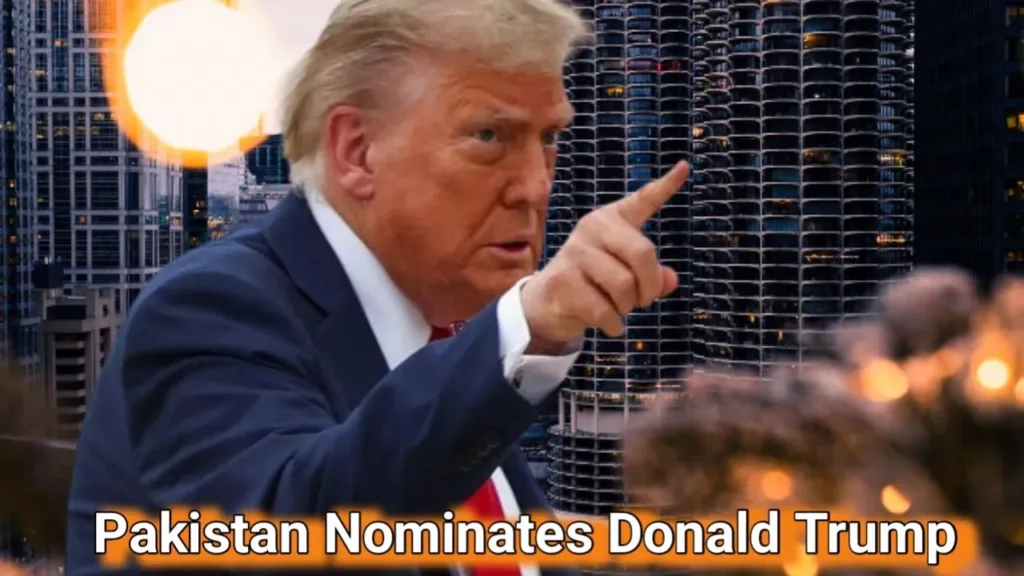
Pakistan credits Donald Trump for helping defuse tensions with India after the deadly Pahalgam terror attack and formally nominates him for the 2026 Nobel Peace Prize.
Pakistan Credits Trump for Defusing War Threat with India, Nominates Him for 2026 Nobel Peace Prize
In a surprising geopolitical development, Pakistan has officially nominated former U.S. President Donald J. Trump for the 2026 Nobel Peace Prize, applauding his key role in calming recent India-Pakistan military tensions. The announcement came on the heels of a deadly terror attack in Pahalgam, Jammu & Kashmir on May 3, which killed 26 people and triggered fears of large-scale conflict.
Trump’s Role in India-Pakistan De-escalation
According to an official statement posted by the Pakistani government on X (formerly Twitter), Trump is being recognized for his “decisive diplomatic intervention and pivotal leadership” in preventing the situation from spiraling into full-blown war.
“The Government of Pakistan has decided to formally recommend President Donald J. Trump for the 2026 Nobel Peace Prize,” the statement read.
Also Read:- I Am Malala: A Voice That Rose Against Bullets and Silence
The announcement followed a rare diplomatic meeting between Pakistan’s Army Chief, Field Marshal Asim Munir, and Donald Trump at the White House. While the full agenda of the meeting remains undisclosed, Pakistani media reports suggest that Munir himself advocated for Trump’s Nobel nomination, believing the former U.S. President played a critical role in avoiding nuclear escalation in the region.
High-Level Diplomatic Moves and Reactions
White House spokesperson Anna Kelly confirmed that the Trump-Munir meeting had taken place and acknowledged the general’s appreciation for Trump’s peace efforts.
Local media outlets such as Dawn and Geo News described the White House invitation as a major diplomatic win for Islamabad. Munir’s recent elevation to Field Marshal — the first since Ayub Khan in 1959 — has added symbolic weight to Pakistan’s international outreach.
Operation Sindoor: India’s Response to Terror
Tensions between India and Pakistan peaked after India launched Operation Sindoor on May 7, striking terror camps across the Pakistan-controlled region. The swift military operation came in direct retaliation to the Pahalgam terror strike.
The conflict resulted in four days of intense cross-border shelling, which ceased on May 10 after both sides agreed to a temporary ceasefire.
However, India has maintained that its strong military retaliation was the key factor that made Pakistan reconsider its aggressive posture.
India’s Firm Stance on Future Terror Attacks
During a recent visit to Udhampur, Jammu and Kashmir, India’s Defence Minister Rajnath Singh reiterated that Operation Sindoor is far from over and warned that India will not hesitate to act again if provoked.
“Pakistan must understand that its strategy of a thousand cuts will not work. Any terror attack on Indian soil will be met with a stronger, more decisive response,” Singh told troops of the Northern Command, accompanied by Army Chief General Upendra Dwivedi.
Indian officials describe Operation Sindoor as one of the most assertive military operations in recent years, showcasing New Delhi’s willingness to escalate if national security is compromised.
Read more:-1.Axiom Mission 4: India’s Giant Leap into Space with Shubhanshu Shukla on Board
2. Elon Musk Biography: Journey of a Visionary Who’s Changing the World