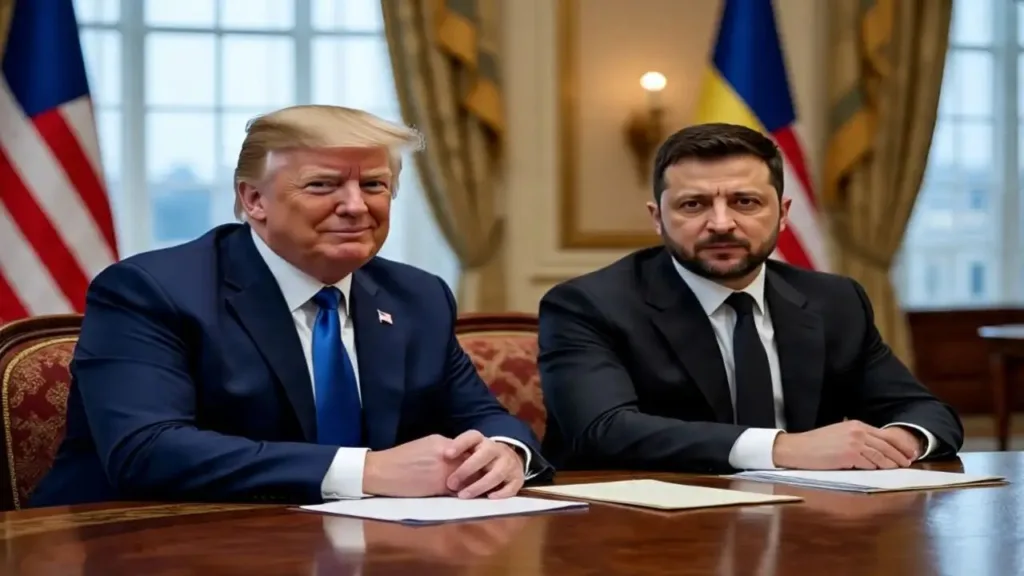
The much-awaited meeting between Donald Trump and Ukrainian President Volodymyr Zelensky in 2025 has attracted worldwide attention, coming at a time when global politics is delicately balanced between ongoing conflict in Eastern Europe, NATO’s strategic role, and the future of U.S. foreign policy.
This face-to-face interaction marks a pivotal moment, not only for U.S.–Ukraine relations but also for broader geopolitics involving Russia, NATO, and European security. With both leaders under the international spotlight, the Trump–Zelensky meeting delivered strong statements, raised hopes for diplomatic solutions, and sparked new debates across global media.
Background of the Trump–Zelensky Meeting
The Trump–Zelensky meeting came amid heightened tensions in Eastern Europe. Ukraine continues to face challenges in its war efforts and economic rebuilding, while the United States remains a central figure in supporting Kyiv both militarily and diplomatically.
Donald Trump, who returned to the White House in 2025, had been vocal about reassessing U.S. foreign commitments, NATO contributions, and strategies for peace in the Russia–Ukraine war. His approach contrasts with previous administrations, making this summit crucial in signaling the direction of U.S. foreign policy under his leadership.
Volodymyr Zelensky, on the other hand, sought to strengthen Ukraine’s ties with Washington, ensure continued U.S. support, and highlight Ukraine’s resilience and determination in defending its sovereignty.
Main Discussions During the Meeting
- Peace Negotiations with Russia
- Trump emphasized the importance of seeking “productive dialogue” and hinted at possible diplomatic channels with Moscow.
- Zelensky welcomed U.S. engagement but reiterated Ukraine’s stance on maintaining territorial integrity.
- NATO and European Security
- Trump announced he would soon call NATO leaders for consultations, signaling that the U.S. expects greater accountability and contribution from European allies.
- This raised discussions on how NATO’s future strategies will evolve under Trump’s leadership.
- Military and Financial Aid
- Zelensky pushed for sustained military aid, air defense systems, and financial backing.
- Trump, while cautious on “blank-check spending,” reassured that the U.S. would not abandon Ukraine but emphasized the need for “fair and transparent” assistance.
- Global Stability and Trade
- Beyond the war, both leaders discussed trade opportunities, reconstruction projects in Ukraine, and U.S. investment potential once stability improves.
Key Statements from the Leaders
- Donald Trump: “We had productive talks. I will be calling up NATO leaders soon, as well as President Zelensky, to ensure we are all working toward peace and stability.”
- Volodymyr Zelensky: “Ukraine values the partnership of the United States. We are fighting for freedom, democracy, and stability, not just for ourselves but for the entire region.”
These statements underline the careful balance Trump is trying to strike: pushing for peace talks while still signaling support for Kyiv.
Global Reactions
The Trump–Zelensky meeting immediately triggered strong responses worldwide:
- European Union: EU leaders cautiously welcomed Trump’s statement but stressed the importance of continued U.S. involvement in Ukraine.
- Russia: The Kremlin responded by accusing the U.S. of prolonging the conflict but noted Trump’s openness to talks as a “positive sign.”
- NATO Allies: Some NATO members expressed concern over Trump’s repeated calls for “fair contribution,” fearing reduced U.S. commitment.
- Media and Analysts: Experts debated whether Trump’s diplomatic approach could accelerate peace or weaken Ukraine’s defense.
Why This Meeting Matters
The Trump–Zelensky meeting is significant because it signals:
- Shifting U.S. Foreign Policy – Trump’s cautious yet pragmatic tone suggests a shift from purely military support toward seeking negotiated solutions.
- Ukraine’s Future Security – Zelensky’s diplomacy highlights Kyiv’s determination to keep Washington engaged as a key ally.
- Impact on NATO – Trump’s insistence on accountability could reshape NATO’s internal dynamics.
- Global Power Play – The meeting influences not just Eastern Europe but global trade, energy security, and U.S.–Russia relations.
Potential Outcomes of the Meeting
- Increased Diplomatic Engagement – Possibility of direct or indirect peace talks involving the U.S., Ukraine, and Russia.
- Conditional U.S. Aid – Washington may continue aid but tie it to greater transparency and European contributions.
- NATO Reforms – Trump’s pressure on NATO could lead to structural or budgetary reforms.
- Ukraine Reconstruction Deals – Post-war reconstruction may open new economic opportunities for U.S. companies.
Conclusion
The Trump–Zelensky meeting in 2025 has set the stage for a new phase in international diplomacy. While many questions remain—such as how far Trump will go in engaging Russia, how NATO will adapt, and whether Ukraine can maintain strong Western backing—the meeting has clearly reshaped the geopolitical conversation.
It was not just a symbolic handshake; it was a signal of changing priorities, a reminder that diplomacy and strategy are evolving, and a critical moment in defining the next steps for peace, security, and cooperation.
❓ FAQs (SEO-optimized)
1. When did the Trump–Zelensky meeting take place in 2025?
The Trump–Zelensky meeting took place in early 2025, marking one of the first major foreign policy events of Trump’s return to the White House.
2. What was discussed during the Trump–Zelensky meeting?
Key topics included NATO’s future, U.S. military and financial aid to Ukraine, peace talks with Russia, and opportunities for post-war reconstruction.
3. Did Trump promise continued aid to Ukraine?
Trump assured support for Ukraine but stressed that aid should be transparent and that NATO allies should contribute more.
4. How did Zelensky respond to Trump’s stance?
Zelensky emphasized Ukraine’s need for consistent U.S. backing and underlined that peace must respect Ukraine’s territorial sovereignty.
5. What did Trump say about NATO in the meeting?
Trump announced he would call NATO leaders soon and repeated his position that European allies must take greater responsibility in defense spending.
6. How did Russia react to the Trump–Zelensky meeting?
The Kremlin criticized the U.S. for extending the conflict but welcomed Trump’s openness to diplomatic talks as a possible positive step.
7. What does this meeting mean for Ukraine’s future?
The meeting reinforces Ukraine’s strong diplomatic ties with the U.S. while also signaling possible shifts in how support and negotiations are handled moving forward.
8. Could this meeting lead to peace talks with Russia?
Analysts believe Trump’s pragmatic tone could open channels for dialogue, though the path to peace remains highly complex.
9. Why is NATO a key focus in the Trump–Zelensky meeting?
Because NATO plays a critical role in Ukraine’s defense strategy, Trump’s insistence on fair contribution from allies could reshape NATO policies.
10. What global reactions followed the Trump–Zelensky meeting?
The EU welcomed the dialogue, Russia issued mixed reactions, and NATO members expressed both caution and interest in U.S. leadership.
Read More:- Trump-Putin Meeting Live Updates: Donald Trump Calls Talks “Productive,” Plans Calls to NATO & Zelenskyy